
Great British Chemicals
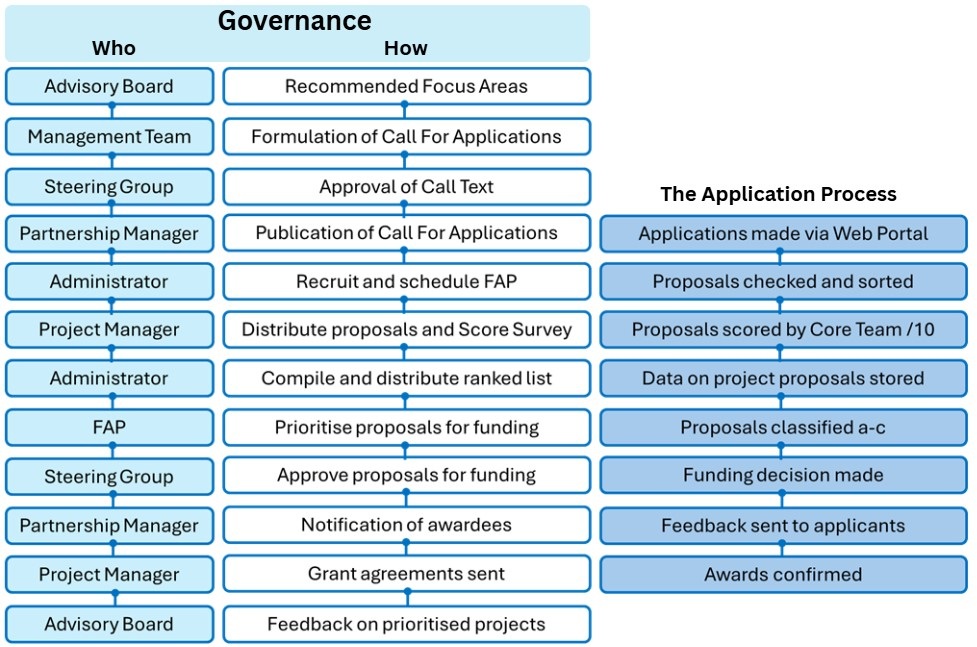
The GB Chemicals Centre represents a national-level systems approach to industrial defossilisation, decarbonisation and Resource Efficiency. It builds on the recognition that the UK’s chemical supply chains are central to the economy but also deeply embedded in fossil dependency. The consortium is committed to reimagining these supply chains right across the chemical using industries in line with circular economy principles, where prosperity is balanced with environmental responsibility and social inclusion. Because GBC aims to build a community around sustainable chemicals, a considerable proportion of the requested funding will be allocated to peer assessed projects from the community, that evolve as time progresses.
- Phase 1 (early stage) - identify high-potential research innovations and assess their industry applicability through feasibility studies, market analysis, and project prioritisation based on scalability and readiness.
- Phase 2 (mid stage) – advance prioritised projects to validated tools/services by supporting development, industry collaborations for real-world testing, and technical and commercial validation.
- Phase 3 (late stage) –facilitate full-scale deployment by ensuring technologies are finalised to industry standards, promoting their adoption through pilot programmes, and creating sustainable commercial pathways for long-term industry uptake
People theme:
This theme prioritises skills, culture, capacity and leadership development and will respond to new ideas in a way which is inclusive, collaborative, and ethically motivated. Activities will be designed to deliver sustainable impact at pace by putting people at the heart of the transition to defossilisation. Early career researcher and technical staff will be prioritised. Funds will also be available to host meetings for co-creation and development of new and existing areas.
Planet theme:
This theme integrates quantitative supply chain data with qualitative inputs to identify efficiency opportunities and environmental challenges that may hinder sustainability. Activities will accelerate the translation of research innovation ideas into economic, environmental, regulatory and societally relevant actions at different points on the Technological Readiness Level (TRL), Societal Readiness Level (SRL) and Adoption Readiness Level (ARL) pathways. Life-cycle assessment (LCA) and techno-economic assessment (TEA) feature heavily within this stream.
Prosperity theme:
This theme emphasizes strong engagement with industries, corporations, and SMEs to analyse business models, supply chains, corporate structures, risks, strategies, and targets. The goal is to bridge research findings with practical applications, addressing key commercial questions and enabling successful translation into business in practice.
For Planet and Prosperity, a structured pipeline of investments at different TRL/SRL will de-risk investment in innovation and impact generation by operating as a staged portfolio: a larger number of smaller, higher-risk awards targeted at TRL/SRL 1–3 (circa £30k) to test feasibility and novel partnerships, and a smaller number of larger, lower-risk demonstrations